Psychedelics Blog
Medicinal Mushrooms Market Growth: What the 2033 Forecast Means for Functional and Psychedelic Mushrooms
Oct
The medicinal mushrooms market growth story is becoming difficult to ignore. A recent market projection reported a potential increase in the global medicinal mushrooms market to approximately $79.2 billion by 2033, representing an estimated compound annual growth rate of 10.5%. Forecasts are not guarantees, but they reflect a broader shift: more people are exploring mushrooms as part of wellness routines, scientific research, and emerging psychedelic medicine.
For consumers in the United States, this growth brings both opportunity and responsibility. The term “medicinal mushrooms” can refer to very different products, from non-intoxicating functional mushrooms such as lion’s mane and reishi to psilocybin mushrooms, which contain psychoactive compounds and remain federally controlled in the United States. Understanding that difference is essential before evaluating a product, a claim, or a trend.
Why is the medicinal mushrooms market growing?
Several forces are contributing to the rising interest in mushrooms. Consumers are looking for plant-based wellness products, researchers are studying fungal compounds, and companies are developing new formats such as capsules, powders, beverages, extracts, and dried mushroom products.
At the same time, mushrooms have become more visible in discussions about cognitive health, stress, immunity, nutrition, and mental health. Some of these areas have promising early research, while others are supported mainly by traditional use, laboratory studies, or preliminary human evidence. Market growth does not automatically mean that every product works as advertised.
Growing consumer interest in functional mushrooms
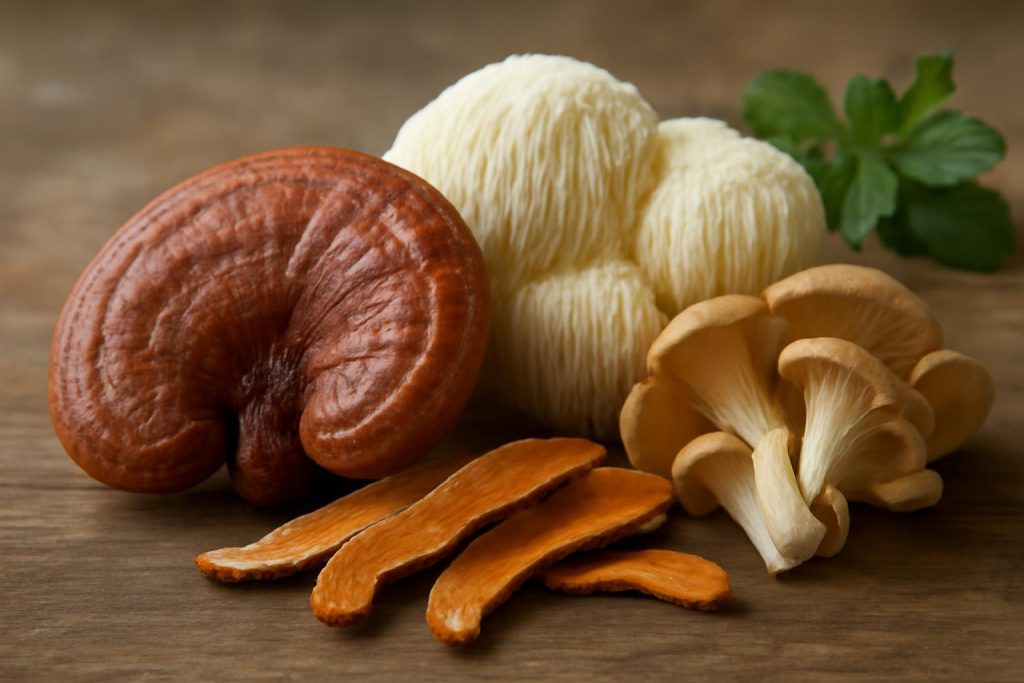
Functional mushrooms are generally marketed for wellness purposes without producing a psychedelic experience. Common examples include lion’s mane, reishi, cordyceps, chaga, and turkey tail. Each has a different nutritional and chemical profile, and research quality varies considerably by species and intended use.
Lion’s mane, for example, is frequently discussed in connection with memory and nerve-related research. Reishi is often included in relaxation and general wellness products. Cordyceps is commonly marketed for energy and exercise support. These descriptions should not be treated as medical promises. A supplement is not a substitute for diagnosis, treatment, or advice from a qualified healthcare professional.
Increasing attention to psilocybin research
Psilocybin mushrooms are another major reason mushrooms are appearing in public conversations. Psilocybin is a naturally occurring psychedelic compound found in certain fungi, including some species of Psilocybe. Researchers are investigating whether psilocybin-assisted therapy may have applications for conditions such as depression, anxiety associated with serious illness, substance use disorders, and trauma-related symptoms.
Research settings are carefully structured. They may include screening, preparation sessions, professional support during the experience, and follow-up integration. That model is very different from taking unknown mushrooms alone or purchasing an inaccurately labeled product online.
Interest in psychedelic therapy should therefore be separated from exaggerated claims about recreational shrooms. Clinical research does not prove that every mushroom product is safe, effective, or appropriate for every person.
Functional mushrooms and psychedelic mushrooms are not the same
One of the most important developments in the expanding mushroom market is clearer product education. “Healing mushrooms” is a broad phrase, not a standardized scientific category. Products sold under that umbrella can differ in species, active compounds, intended effects, legal status, and safety considerations.
| Category | Examples | Important distinction |
|---|---|---|
| Functional mushrooms | Lion’s mane, reishi, cordyceps, chaga | Usually non-intoxicating and sold as foods or supplements, depending on the product and jurisdiction. |
| Psilocybin mushrooms | Some Psilocybe species | Contain psychoactive compounds and may be illegal to possess or distribute under federal or state law. |
| Culinary mushrooms | Shiitake, oyster, maitake | Primarily valued as food, although they may also provide nutrients and bioactive compounds. |
Consumers should read the label carefully rather than assuming that a product described as “mushroom wellness” contains a particular species or produces a particular effect. A product may contain a whole mushroom, an extract, mycelium, a blend, or an ingredient with limited disclosure.
What market growth could mean for product quality
A larger market can encourage better manufacturing, more testing, and improved consumer education. It can also attract companies that make aggressive claims or use confusing labels. Quality control will be one of the most important issues as the industry develops.
Look for clear labeling
A responsible mushroom product should identify the mushroom species, serving size, ingredient list, and form used. If an extract is included, the label should explain whether it is made from fruiting bodies, mycelium, or a combination. Vague terms such as “proprietary mushroom complex” make it harder to evaluate what you are buying.
Consider independent testing
Testing can help identify contamination, heavy metals, pesticides, microbial problems, or inaccurate ingredient levels. A certificate of analysis from an independent laboratory is more useful when it clearly matches the product lot and identifies the methods used. Testing does not prove that a product will deliver a specific health benefit, but it can provide important information about identity and purity.
Be cautious with medical claims
Statements promising to cure cancer, replace antidepressants, eliminate anxiety, or prevent serious disease should be treated as warning signs. Even promising research on a mushroom compound does not justify turning early findings into guaranteed consumer outcomes.
This is especially important for products associated with psilocybin. Psilocybin effects can include changes in perception, mood, time awareness, thought patterns, heart rate, and blood pressure. Some people experience fear, confusion, panic, or prolonged distress. Individuals with a personal or family history of psychotic disorders, certain bipolar conditions, or significant cardiovascular concerns should speak with a qualified clinician before considering any psychedelic exposure.
How psilocybin research may influence the market
Scientific interest in psilocybin may influence the broader mushroom industry in several ways. First, it may encourage more precise distinctions between species and compounds. Second, it may lead to improved standards for screening, preparation, dosing, supervision, and follow-up in legal research or regulated programs. Third, it may help consumers understand that psychedelic therapy is a structured healthcare model rather than simply a stronger version of recreational mushroom use.
However, research findings can take years to translate into approved treatments. A study may involve a small sample, a specific diagnosis, carefully selected participants, and professional support that is not available in an unsupervised setting. Headlines about positive results should always be considered alongside study limitations, adverse events, and the legal framework where a person lives.
People interested in the subject can use the Healing Mushrooms Delivery homepage as a starting point for learning about the site’s mushroom and wellness focus. It is still important to verify current federal, state, and local laws before purchasing, possessing, cultivating, or transporting any product containing psilocybin.
What consumers should ask before buying mushroom products
1. What species and compounds are actually included?
Do not rely only on a product name or an image. Check the ingredient panel for the scientific name and determine whether the product contains a non-intoxicating functional mushroom or a psychoactive substance.
2. Is the product legal where I live?
Mushroom laws vary by jurisdiction and can change. Psilocybin remains federally controlled in the United States, while some states and municipalities have created limited exceptions, decriminalization policies, research programs, or regulated services. These approaches are not interchangeable, and a local policy may not authorize commercial delivery or possession.
3. Is the product accurately tested and labeled?
Look for batch information, testing documentation, clear serving guidance, and a way to contact the seller. Avoid products that conceal the ingredients, make guaranteed medical claims, or provide no information about manufacturing.
4. Could it interact with my health conditions or medications?
Supplements and psychedelic substances can create risks for people taking prescription medicines or managing chronic conditions. Discuss planned use with a healthcare professional, particularly if you take psychiatric medication, have heart or blood pressure concerns, are pregnant or breastfeeding, or have a history of severe mental health symptoms.
For additional site navigation, readers can review the available mushroom content categories and browse the site’s post archive. These links can help locate educational material as the website develops, but they should not replace professional medical or legal advice.
Frequently asked questions
Are medicinal mushrooms the same as magic mushrooms?
No. Medicinal mushrooms is a broad, informal term that may include non-intoxicating functional mushrooms and, in some contexts, psychedelic mushrooms. Magic mushrooms generally refers to mushrooms containing psilocybin or related psychoactive compounds. Always check the species and ingredients instead of relying on general marketing language.
Does market growth prove that mushroom products work?
No. Market growth reflects demand, investment, product availability, and consumer interest. It does not prove that every product is effective or that a particular health claim has been clinically established.
Are psilocybin mushrooms legal in the United States?
Psilocybin is federally controlled in the United States, although some states and local jurisdictions have adopted limited reforms or regulated programs. Laws can differ substantially, so consumers should check official local guidance before taking any action.
What is the safest way to evaluate a functional mushroom supplement?
Look for transparent labeling, a clearly identified species, responsible claims, lot-specific testing when available, and reputable manufacturing information. Ask a healthcare professional about possible interactions if you have a medical condition or take medication.
The outlook for the mushroom wellness industry
The projected medicinal mushrooms market growth suggests that mushrooms will remain a prominent part of wellness, nutrition, and medical research discussions. The most valuable progress will not come from bigger promises alone. It will come from better species identification, stronger quality controls, responsible communication, and research that clearly separates established evidence from early findings.
For consumers, the best approach is informed curiosity. Learn the difference between functional and psychedelic mushrooms, evaluate labels carefully, respect the law, and treat dramatic health claims with skepticism. As the industry expands, education and safety will be just as important as innovation.
